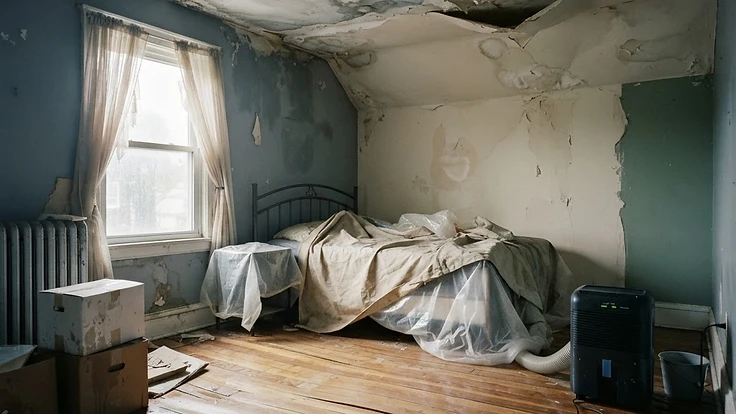
Rent Abatement in North Carolina: Can You Get Money Back When Your Landlord Fails to Make Repairs?
Rent abatement may compensate North Carolina tenants when a landlord’s failure to maintain the home reduces its fair rental value. Learn how courts calculate it, the evidence you need, why you cannot simply withhold rent, and how UDTP claims differ.
- Jurisdiction
- North Carolina — N.C.G.S. § 42-42
- Last Reviewed
- October 2026
- Reading Time
- 11 min
What to know
In North Carolina, repair and maintenance rights is governed by N.C.G.S. § 42-42, and the deadlines that statute sets are what protect your money and your record. Circuit Facts™ is a free logging tool that keeps your lease dates, charges, and repairs together in one dated Housing Record.
What This Guide Covers
You pay your rent every month. In return, you expect a home with working plumbing, safe electrical systems, and living conditions that meet North Carolina’s legal standards. But what happens when your landlord fails to maintain those conditions? Perhaps a plumbing leak has damaged your bedroom, your bathroom has been unusable for weeks, or recurring flooding has made part of your rental home unsafe. You continue paying full rent, even though you can no longer fully use the property you agreed to rent. That raises an important question: if your landlord isn’t providing the home you’re paying for, should you still have to pay its full rental value? North Carolina law provides a potential remedy known as rent abatement. But rent abatement does not mean tenants can simply decide to stop paying rent. It is a legal claim that can allow tenants to recover compensation for a landlord’s failure to meet certain housing obligations. Let’s examine how it works.
What the Rule Says
What is rent abatement under North Carolina law?
Rent abatement is a legal remedy that may compensate a tenant when a landlord’s breach of maintenance obligations reduces the fair rental value of a rental property.
Under N.C. Gen. Stat. § 42-42, North Carolina landlords must maintain rental premises in a fit and habitable condition and comply with other applicable statutory obligations. When a landlord fails to meet those duties, a tenant may have grounds to seek monetary relief under § 42-44 and applicable North Carolina case law.
Consider a simple example. You rent a two-bedroom apartment for $1,200 per month. A persistent plumbing problem makes one bedroom unusable for an extended period. Despite appropriate notice, the landlord fails to correct the condition. You are still paying for a two-bedroom apartment — but are you receiving the rental value of a fully usable two-bedroom apartment? That difference is the central issue in a rent abatement claim.
Rent abatement is not automatically a refund of all rent paid. It is an assessment of the rental value lost because of qualifying defects.
How do North Carolina courts calculate rent abatement damages?
North Carolina courts generally use a fair-rental-value comparison to evaluate damages for breach of the implied warranty of habitability. The calculation compares what the rental property should have been worth with what it was actually worth in its defective condition: rent abatement damages equal the fair rental value as warranted minus the fair rental value in its actual condition.
The calculation must also account for the relevant period, the applicable legal limitations, and the evidence presented.
For illustration: suppose a tenant pays $1,200 per month, and a persistent plumbing leak makes an essential part of the home unusable. Assume the court determines the fair rental value as warranted was $1,200 per month, but only $800 in its defective condition — a $400 monthly difference. If the court finds the same $400 monthly loss continued for three qualifying months, the calculation would be $400 × 3 months = $1,200 in potential rent abatement damages. This is an illustration, not a guaranteed court award. The court must determine the relevant rental values from the evidence, and the amount stated in the lease does not necessarily establish the property’s fair rental value as warranted.
Is there a limit on damages? Yes. North Carolina case law provides that the damages do not exceed the total amount of rent paid by the tenant during the relevant period (Von Pettis Realty, Inc. v. McKoy, 135 N.C. App. 206 (1999)). A tenant should therefore not assume that a rent-abatement claim alone will produce a recovery greater than the rent paid during the qualifying period. Other legally distinct claims may have different rules.
A rent abatement calculation is a legal valuation question, not simply a percentage the tenant chooses.
Do you have to stop paying rent to request rent abatement?
No. In fact, stopping rent payments without proper legal authorization can create additional problems.
Under N.C. Gen. Stat. § 42-44(c), North Carolina tenants generally cannot unilaterally withhold rent before a judicial determination of their right to do so.
This creates an important distinction. Withholding rent means deciding not to pay rent that is otherwise due. Seeking rent abatement means asking a court to determine whether a landlord’s breach of housing obligations entitles the tenant to monetary relief. These are not the same action.
A tenant who stops paying rent may face a summary ejectment action — commonly called an eviction case — even if serious repair problems exist. For that reason, tenants should obtain qualified legal advice before withholding rent, deducting repair expenses, or changing their payment arrangements.
How can you bring a rent abatement claim?
Tenants may raise rent abatement in different procedural situations.
Option A — you bring a claim against your landlord. You do not necessarily need to wait for your landlord to sue you. A tenant may initiate a civil action seeking compensation for a landlord’s breach of applicable housing obligations. For claims within the applicable jurisdictional amount, small claims court may be an available forum; North Carolina’s small claims monetary limit varies by judicial district within statutory boundaries, so tenants should confirm the current limit with their local clerk of superior court. The tenant generally must establish the landlord’s legal obligation, the breach, and the resulting damages. Legal Aid of North Carolina publishes a pro-se complaint template for rent abatement and unfair or deceptive trade practices claims.
Option B — you raise rent abatement in an eviction case. Suppose a landlord files a summary ejectment action alleging unpaid rent. The tenant may have grounds to assert a habitability-related claim or counterclaim that affects the amount legally owed. Depending on the evidence and procedural requirements, a court may consider rent abatement when determining the financial dispute between the parties.
However, raising rent abatement does not automatically stop an eviction. The outcome depends on the grounds for eviction, the nature of the claim, applicable procedure, and the court’s findings. A valid repair complaint is not a substitute for responding to an eviction summons or attending a scheduled hearing.
Can you also sue for unfair or deceptive trade practices under N.C.G.S. § 75-1.1?
In some circumstances, a tenant may have a separate claim under North Carolina’s Unfair and Deceptive Trade Practices Act, N.C. Gen. Stat. § 75-1.1. This law addresses qualifying unfair or deceptive acts or practices in or affecting commerce.
But there is an important limitation: a landlord’s failure to make repairs does not automatically prove an unfair or deceptive trade practice. A successful claim generally requires proof of the legal elements of § 75-1.1, including conduct that qualifies as unfair or deceptive, its connection to commerce, and resulting injury. Whether a landlord’s conduct meets that standard depends on the circumstances and applicable case law.
What about triple damages? Under N.C. Gen. Stat. § 75-16, a successful unfair or deceptive trade practices claim can result in treble damages. For example, if a court determines that a qualifying violation caused $2,000 in compensable injury, the statutory trebling provision may result in $6,000 for that claim. But this does not mean every rent abatement award is automatically tripled. The tenant must independently establish the unfair or deceptive trade practices claim and the damages legally attributable to it.
Because these claims can involve complex legal and procedural issues, professional legal advice is particularly valuable.
Practical Guidance
What evidence do you need to prove a rent abatement claim?
Rent abatement cases depend on evidence. A tenant’s statement that the apartment was uncomfortable, unsafe, or worth less may be relevant, but the court needs facts supporting the alleged breach and the claimed loss in rental value.
Evidence of the defective condition: photographs and videos can establish what was wrong with the property — water spreading across a floor, damaged walls, ceilings, or flooring, a leaking plumbing fixture, a bathroom that cannot be used, or visible moisture damage or suspected mold. Preserve original files and their dates when possible. Photographs can establish visible conditions, but they do not necessarily prove the cause of a leak, the presence of toxic substances, or the extent of a health hazard.
Evidence that the landlord received notice: keep copies of repair requests, emails, text messages, maintenance portal entries, and other communications. Written notice is especially important for many repair obligations under § 42-42. The record should help establish when the landlord learned of the condition and what information was provided.
Evidence showing how long the condition continued: a single photograph may show that water was present on one day, but it may not establish that the same condition continued for six weeks. Create a timeline showing when the problem began, when you reported it, what repairs were attempted, and when the condition was resolved.
Inspection reports and independent evidence: reports from local housing inspectors, code enforcement officials, or qualified repair professionals may provide additional support. An inspection finding can be important evidence, but it does not automatically establish every element of a civil claim.
Evidence supporting the rental-value calculation: this is the part tenants may overlook. You must do more than establish that something was broken — you should be prepared to explain how the condition reduced the property’s fair rental value. Relevant evidence may include the extent of unusable living space, the seriousness of the defect, the length of the disruption, and reliable information about comparable rental properties. The court ultimately determines what weight to give the evidence.
How do you organize your case before filing?
Before beginning a legal action, take time to assemble a clear record. A practical case file should answer six questions:
What specific condition made the property defective? Which legal maintenance obligation may have been violated? When did the landlord receive notice, and what notice was legally required? How long did the condition remain unresolved? How did the condition reduce the property’s fair rental value? And what monetary relief are you requesting, and how did you calculate it?
A well-organized case file cannot guarantee success, but it can make your claim easier to explain and support. Avoid exaggerating conditions or estimating dates from memory when original records are available. Your objective is to present a reliable account of what happened, supported by evidence.
Where can you find reliable help in North Carolina?
For further information, start with authoritative legal and educational resources: the North Carolina General Statutes (§ 42-42, § 42-44, § 75-1.1, and § 75-16, available at ncleg.gov), the UNC School of Government’s analysis of how magistrates and judges handle rent abatement claims, and Legal Aid of North Carolina — which publishes a pro-se complaint template for rent abatement and unfair or deceptive trade practices claims.
Because rent abatement, eviction defenses, and trade-practices claims depend on specific facts and procedural requirements, consider consulting a qualified North Carolina attorney or Legal Aid of North Carolina before filing.
How can Circuit Facts help you organize the evidence?
When a maintenance dispute continues for months, important information can become scattered across text messages, emails, photographs, and maintenance portals. Circuit Facts supports a documentation-first approach.
By keeping a structured record of housing-related concerns, tenants can better organize maintenance issues and supporting evidence, dates of reported problems, landlord and property-management communications, follow-up requests and responses, and records relevant to the duration and impact of unresolved conditions.
These records may help tenants prepare for conversations with landlords, housing inspectors, legal aid organizations, or attorneys. Circuit Facts does not determine fair rental value, calculate a legally binding damages award, decide whether a statute was violated, or guarantee a particular court outcome. Those determinations require legal analysis and, when disputed, may ultimately belong to the courts. The goal is straightforward: help tenants turn scattered information into an organized, factual record.
Official Sources
N.C. Gen. Stat. § 42-42 — Landlord to provide fit premises
North Carolina General Assembly
N.C.G.S. § 42-42
§ 42-42(a)
Last checked: October 2026View official sourceN.C. Gen. Stat. § 42-44 — General remedies, penalties, and limitations
North Carolina General Assembly
N.C.G.S. § 42-44
§ 42-44(c)
Last checked: October 2026View official sourceN.C. Gen. Stat. § 75-1.1 — Methods of competition, acts and practices regulated
North Carolina General Assembly
N.C.G.S. § 75-1.1
§ 75-1.1
Last checked: October 2026View official sourceN.C. Gen. Stat. § 75-16 — Civil action by person injured; treble damages
North Carolina General Assembly
N.C.G.S. § 75-16
§ 75-16
Last checked: October 2026View official sourceWhat Happens When the Tenant Raises the Issue of Rent Abatement? (UNC School of Government)
UNC School of Government
UNC SOG — Rent Abatement
Measure of damages; Von Pettis Realty, Inc. v. McKoy, 135 N.C. App. 206 (1999)
Last checked: October 2026View official sourcePro Se Complaint Template: Rent Abatement and UDTP (Legal Aid of North Carolina)
Legal Aid of North Carolina
LANC — Rent Abatement Complaint Template
Last checked: October 2026View official sourceLegal Aid of North Carolina
Legal Aid of North Carolina
Legal Aid of North Carolina
Last checked: October 2026View official source
What to Document
- What condition made the property defective, shown in photos or videos?
- Which maintenance obligation may have been violated?
- When and how did the landlord receive notice of the problem?
- How long did the condition remain unresolved?
- How did the condition reduce the property’s fair rental value?
- What monetary relief are you requesting, and how did you calculate it?
- Do you have copies of every repair request, response, and inspection report?
Documentation Steps
Record the defective condition with dated photos or videos, and save the originals.
Report the problem in writing and keep copies of every request and response.
Log each follow-up: what was promised, what was done, and how long the condition continued.
Note how the condition limited your use of each living space, month by month.
Collect rental-value evidence: your rent, comparable listings, and any inspection reports.
Related Guides
When Your Landlord Won't Fix It: Understanding Your Repair Rights in North Carolina
North Carolina landlords must keep rentals fit and habitable under N.C.G.S. Chapter 42. Learn what the law requires, when plumbing leaks or flooding become habitability problems, why you generally cannot withhold rent, and what to do instead.
Read the articleHow to Document a Repair Request in North Carolina (And Why It Matters)
NC law requires landlords to maintain rental units in habitable condition. Here is how to submit and document a repair request so your record is clear if the problem is not fixed.
Read the articleHow to Document Landlord Repairs in North Carolina
A repair problem is only as strong as your paper trail. What NC law says about repairs, and how to keep a factual record from first notice to finished work.
Read the article