When Your Landlord Won't Fix It: Understanding Your Repair Rights in North Carolina
North Carolina landlords must keep rentals fit and habitable under N.C.G.S. Chapter 42. Learn what the law requires, when plumbing leaks or flooding become habitability problems, why you generally cannot withhold rent, and what to do instead.
- Jurisdiction
- North Carolina — N.C.G.S. § 42-42
- Last Reviewed
- October 2026
- Reading Time
- 11 min
What to know
In North Carolina, repair and maintenance rights is governed by N.C.G.S. § 42-42, and the deadlines that statute sets are what protect your money and your record. Circuit Facts™ is a free logging tool that keeps your lease dates, charges, and repairs together in one dated Housing Record.
What This Guide Covers
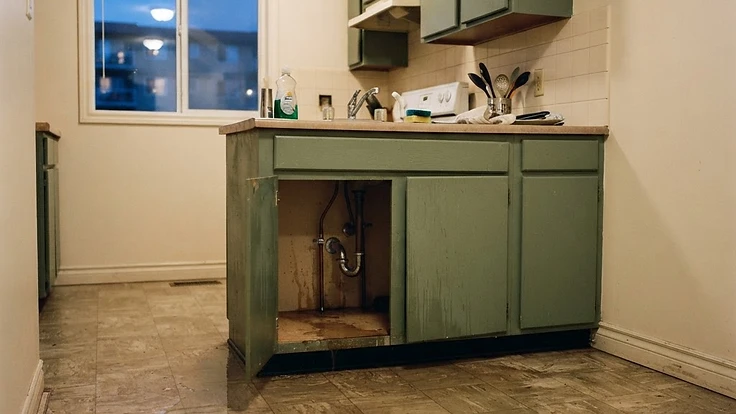
Imagine coming home to find water spreading across your kitchen floor. Perhaps the bathroom plumbing has been leaking for weeks, the ceiling is showing water damage, or sewage is backing up into your home. You report the problem, and days pass. Maybe you hear: "Maintenance will take care of it." But nothing changes. Now you are dealing with more than an inconvenient repair — you are wondering whether your home is safe, who is responsible for fixing the problem, and what you can legally do next. In North Carolina, tenants have important protections under Chapter 42 of the North Carolina General Statutes, including the Residential Rental Agreements Act. Understanding those protections is the first step toward using them effectively. This guide explains what the law requires, how to report and document repair problems, and which options exist when a landlord refuses to act — without telling you what to decide, because that depends on your own circumstances.
What the Rule Says
What must a North Carolina landlord legally do under N.C.G.S. § 42-42?
Under N.C. Gen. Stat. § 42-42(a), landlords must do what is necessary to put and keep rental premises in a fit and habitable condition. That responsibility includes complying with applicable building and housing codes, maintaining essential facilities, and making repairs needed to meet statutory requirements.
In practical terms, landlords generally must: comply with applicable building and housing codes; make all repairs necessary to keep the premises fit and habitable; keep common areas in safe condition; and maintain electrical, plumbing, sanitary, heating, ventilating, and air-conditioning facilities in good and safe working order. For most of these facilities, § 42-42(a)(4) conditions the prompt-repair duty on the tenant giving the landlord written notification of the needed repairs, except in emergency situations.
Section 42-42(a)(8) also requires a landlord, within a reasonable period of time based on the severity of the condition, to repair or remedy an imminently dangerous condition after acquiring actual knowledge or receiving notice of it. The statute lists examples, including unsafe wiring or ceilings, lack of potable water, lack of an operable toilet, and excessive standing water, sewage, or flooding problems caused by plumbing leaks or inadequate drainage that contribute to mosquito infestation or mold. The landlord may recover actual and reasonable repair costs from the tenant when the condition is the tenant’s fault.
These requirements are not simply recommendations for responsible property management. They are duties established by state law. However, responsibility for a particular repair may depend on the cause of the damage, applicable statutory exceptions, and whether the tenant contributed to the condition. A landlord’s legal duty is not necessarily to provide a perfect home — it is to maintain a home that satisfies the applicable legal standards.
When does a plumbing leak, sewage backup, or flooding become a habitability concern?
Not every minor plumbing issue makes a home legally uninhabitable. A dripping faucet and sewage backing up into a bedroom are not equivalent problems. The legal assessment depends on the specific circumstances.
Serious conditions may include: recurring plumbing leaks that damage walls, ceilings, or flooring; sewage backups or malfunctioning sanitary facilities; flooding that creates electrical hazards; persistent moisture that contributes to mold growth or deterioration; and water damage that makes essential areas of the home unsafe or unusable.
North Carolina law requires landlords to maintain plumbing and sanitary facilities in good and safe working order, and serious water-related conditions may also fall within the imminently dangerous conditions listed in § 42-42(a)(8) — which explicitly includes excessive standing water, sewage, or flooding problems caused by plumbing leaks or inadequate drainage that contribute to mosquito infestation or mold, as well as lack of an operable toilet.
What matters is not only that water is present, but why it is present, how serious the condition is, and what the responsible parties do about it. Standing water caused by a defective plumbing system may raise different questions from flooding caused by an extraordinary storm.
Can you stop paying rent until the landlord makes repairs in North Carolina?
This is one of the most important questions for North Carolina tenants, and the general answer is: no. Under N.C. Gen. Stat. § 42-44(c), a tenant may not unilaterally withhold rent prior to a judicial determination of the tenant’s right to do so.
A written agreement with the landlord may provide an alternative arrangement, but tenants should not assume that a repair problem automatically authorizes nonpayment. Even when a landlord appears to be violating maintenance obligations, stopping rent payments without a legally valid basis can expose a tenant to eviction proceedings for nonpayment.
This may feel unfair when the rental property has serious problems. But the distinction matters: a landlord’s failure to repair does not automatically eliminate the tenant’s obligation to pay rent. Tenants facing this situation may benefit from consulting a qualified North Carolina housing attorney or Legal Aid of North Carolina before changing how they pay rent.
What can you do if the landlord refuses to make repairs?
If a landlord fails to address a serious repair problem, tenants may have several options depending on the circumstances. None of them is automatic, and each depends on the facts.
Rent abatement: rent abatement is a potential legal remedy when a landlord’s breach of maintenance obligations reduces the fair rental value of the home. For example, if serious plumbing problems substantially limit the use of a bathroom or other essential living space, a tenant may be able to seek compensation based on the property’s reduced rental value. The amount is not automatically equal to the cost of repairs or the entire monthly rent; a court may consider the nature, severity, and duration of the conditions, along with other relevant evidence. Qualifying monetary claims may be brought in small claims court, subject to jurisdictional limits, while other claims may require a different court or procedure.
Code enforcement: serious plumbing, sanitation, structural, or safety problems may warrant inspection by local housing or code enforcement officials — depending on where you live, a municipal housing inspector, county inspections department, or local 311 service. An inspection can help identify violations of applicable housing or building codes. A code enforcement complaint and a private lawsuit are separate processes, and a code violation does not automatically establish the amount of compensation a tenant may recover.
Lease termination: when a rental home becomes severely damaged or unsafe, a tenant may have grounds to explore lease termination or other remedies — but leaving the property does not automatically cancel the lease. N.C. Gen. Stat. § 42-12 addresses certain circumstances involving destruction of rented premises without tenant fault: its application depends on statutory requirements (including that the damage cannot be made reasonably fit except at an expense exceeding one year’s rent, that the lease does not provide otherwise, and that a written surrender be delivered or tendered within 10 days of the damage) and on the facts. Constructive eviction is another potential doctrine, but it involves specific requirements and generally cannot be established simply because repairs are delayed. Before moving out or declaring a lease terminated, consider consulting a qualified North Carolina housing attorney or Legal Aid of North Carolina.
Practical Guidance
How do you report a repair problem and create a record?
When something goes wrong, calling the leasing office or speaking with maintenance is a natural first step — but a conversation alone can be difficult to prove later. For many repair obligations under § 42-42, written notification is legally important: the duty to promptly repair facilities under § 42-42(a)(4) is triggered by written notice from the tenant, except in emergency situations. The safest general practice is to report repair concerns in writing as soon as possible.
Your written request should identify: the problem and its location; when you first noticed it; whether the condition is worsening; any immediate health or safety concerns; and the repairs you are requesting. Include photographs or videos when possible, and retain a copy of your communication.
For urgent hazards, use the property’s emergency maintenance procedure immediately rather than waiting for an email response — then follow up in writing to preserve a record.
Why does documentation matter?
Imagine two tenants experiencing the same plumbing problem. Tenant A reports the leak by telephone three times but has no record of the conversations. Tenant B submits a dated written request, photographs the damage, and saves the landlord’s responses. Both tenants may have legitimate complaints — but Tenant B has a clearer record of when the landlord was notified, what the landlord knew, and how the situation developed.
Documentation does not create your rights. It helps establish the facts needed to protect them.
How do you build a repair timeline before a dispute starts?
A repair dispute often develops gradually: the first leak seems minor, maintenance promises to return, a second request goes unanswered, and eventually the damage becomes much more serious. By that point, the central question may no longer be simply whether the plumbing failed — it may be who knew what, when did they know it, and what happened afterward.
A useful repair timeline preserves five kinds of information: Discovery — when you first noticed the problem; Evidence — the photographs, videos, or observations that document the condition; Notice — when and how you notified the landlord; Response — what management or maintenance said or did; and Impact — how the condition affected your ability to use the home.
Keep the original records whenever possible, including messages, emails, work orders, inspection reports, and repair receipts. Avoid altering original photographs or deleting communications after a dispute begins. Your records should tell a factual story, not simply express frustration.
Where can you find reliable help in North Carolina?
For additional information, consult official statutes and established legal assistance organizations: the North Carolina General Statutes (including § 42-42, § 42-44, and § 42-12, available at ncleg.gov), Legal Aid of North Carolina (legalaidnc.org), and LawHelpNC (lawhelpnc.org).
For immediate threats involving electrical hazards, contaminated water, or unsafe living conditions, contact appropriate emergency services or local authorities as necessary.
How can Circuit Facts help you organize the evidence?
Knowing your rights is important. Keeping track of what happened is equally important. Circuit Facts is designed to help North Carolina renters organize information related to rental housing concerns: the date a problem was discovered, a description of the condition, supporting photographs or documents, copies of maintenance requests and landlord communications, and follow-up actions and unresolved questions.
Rather than relying on memory or searching through months of messages, you can build a clearer picture of the situation. Circuit Facts does not determine whether a landlord has violated the law, replace a housing inspector, or provide a judicial ruling. Its purpose is to support organized, fact-based documentation so tenants can better understand their situation and communicate with the appropriate professionals or agencies.
Official Sources
N.C. Gen. Stat. § 42-42 — Landlord to provide fit premises
North Carolina General Assembly
N.C.G.S. § 42-42
§ 42-42(a)
Last checked: October 2026View official sourceN.C. Gen. Stat. § 42-44 — General remedies, penalties, and limitations
North Carolina General Assembly
N.C.G.S. § 42-44
§ 42-44(c)
Last checked: October 2026View official sourceN.C. Gen. Stat. § 42-12 — Lessee may surrender, where building destroyed or damaged
North Carolina General Assembly
N.C.G.S. § 42-12
§ 42-12
Last checked: October 2026View official sourceLegal Aid of North Carolina
Legal Aid of North Carolina
Legal Aid of North Carolina
Last checked: October 2026View official sourceLandlord Must Make Repairs (LawHelpNC)
Legal Aid of North Carolina
LawHelpNC — Landlord Must Make Repairs
Authored by Legal Aid of North Carolina; resource last updated June 25, 2012.
Last checked: October 2026View official source
What to Document
- When did you first notice the problem?
- Where is the problem, and what does it look like in photos or videos?
- Is the condition worsening or spreading to new areas?
- Are there immediate health or safety concerns?
- What repairs are you requesting, and from whom?
- When and how did you notify the landlord?
- What did maintenance or management say or do in response?
- How has the condition affected your ability to use your home?
- Do you have copies of every message, work order, and inspection report?
Documentation Steps
Report the problem through the property’s official channel; for urgent hazards, use the emergency maintenance procedure immediately.
Follow up with a dated written request describing the problem, its location, when you noticed it, and the repairs you are requesting.
Photograph or video the condition, including surrounding damage, and save the originals.
Save every response from the landlord or maintenance: portal messages, texts, emails, and work orders.
Log each follow-up: dates, channels, what was promised, and what actually happened.
Related Guides
How to Document a Repair Request in North Carolina (And Why It Matters)
NC law requires landlords to maintain rental units in habitable condition. Here is how to submit and document a repair request so your record is clear if the problem is not fixed.
Read the articleHow to Document Landlord Repairs in North Carolina
A repair problem is only as strong as your paper trail. What NC law says about repairs, and how to keep a factual record from first notice to finished work.
Read the articleHow to Build a Rental Timeline in North Carolina
From first notice to final accounting, NC landlord-tenant law runs on dates. Learn how to build a rental timeline that keeps every fact in order.
Read the article